Cleanomic Compostable * Waste Bags: Do They Actually Hold Up?
A month of real use with Cleanomic compostable waste bags: the seal, the produce test, the shelf-life catch, and who should skip them.
This post contains affiliate links. I may earn a commission at no extra cost to you.
No plastic, and that single constraint is what sent me hunting for these bags in the first place. If I’m going to consume something, or have something sitting around my food, I try to have something that does not have plastic in it. And I want to make sure it’s not wasteful. These fit that part of my lifestyle, so I bought them and started using them on produce.
Quick Verdict
A month in, our blueberries are lasting a lot longer in these than in anything else we’ve used. The reason I picked them up in the first place: no plastic touching the food. The catch is the shelf life, not the strength.
Buy if you:
- buy fresh berries weekly and watch half of them go soft
- don’t want plastic anywhere near what you eat
- need a 13 gallon liner that survives coffee grounds and cat litter
- want a BPI certified bag instead of the black plastic at the curb
Skip if you:
- buy in bulk and stockpile, these want to be used within 6 months and kept cool and out of sunlight
- need a reusable bag, a roll of 25 is a roll of 25
- have no compost pickup or pile, the whole point is the end of life
| Size at the link | 13 gallon tall kitchen, with drawstring |
|---|---|
| Count | 25 units per package |
| Certification | BPI certified compostable |
| Shelf life | Use within 6 months, cool and dry |
| Design | Powder-free, fragrance-free |
The Reason I Bought These Had Nothing To Do With Trash
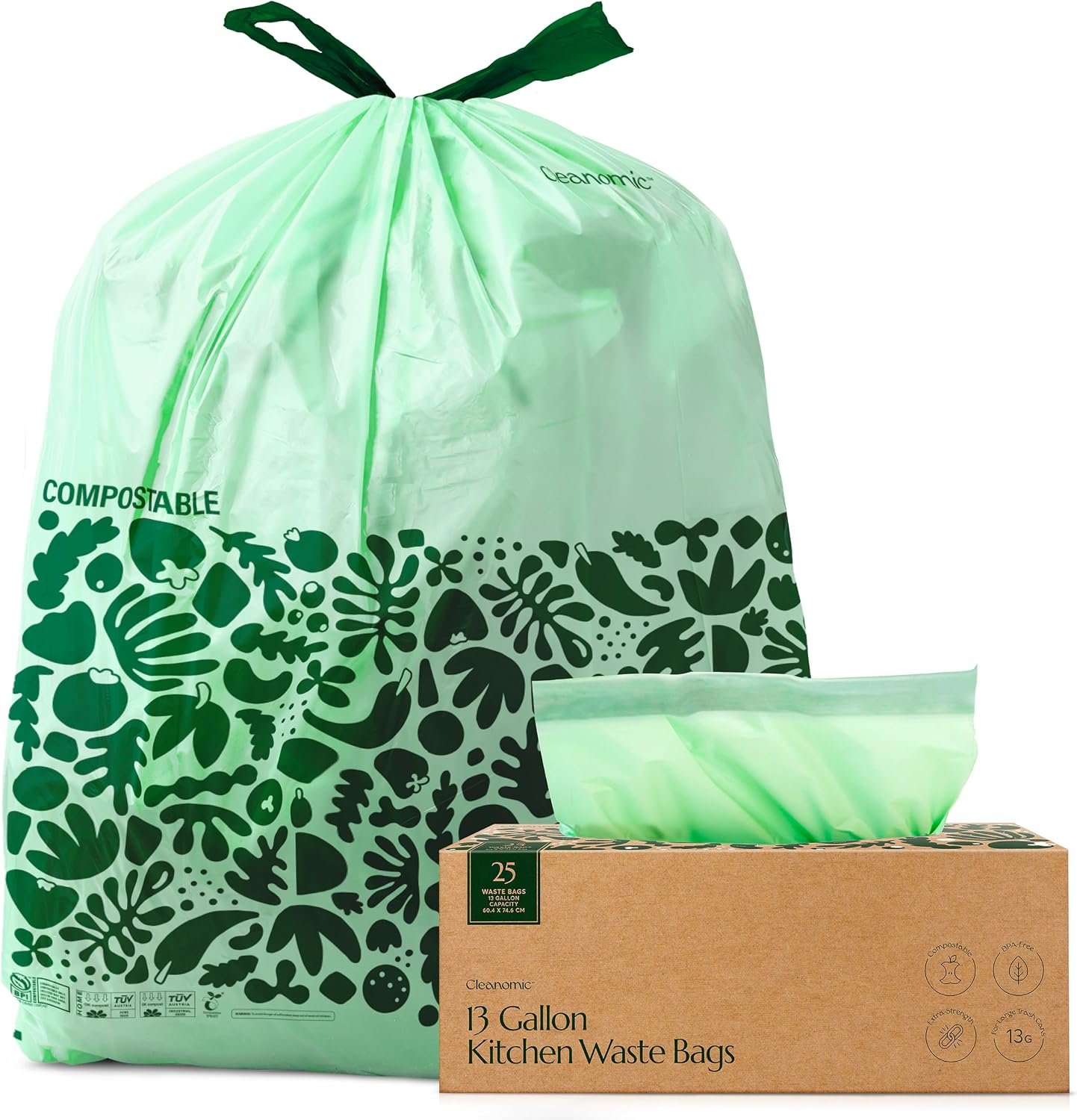
The ones I pulled out on camera were the quart size, 25 bags on a roll. The link above goes to the 13 gallon tall kitchen version with the drawstring, same Cleanomic material. Either way, the thing that sold me was what the bag is made of, not what it’s rated to carry.
Where Compostable Waste Bags Stop Making Sense
Six-month shelf life: that’s the trade-off you’re making, and it’s real. Cleanomic says to use the bags within 6 months of purchase, kept cool, dry, and away from direct sunlight or heat. That’s normal for compostable material, but it changes how you buy. Grabbing four packs to sit in a hot garage for a year is the wrong move. One roll at a time, in a cabinet, is the right one.
The other thing worth knowing: compostable waste bags only pay off if you have somewhere for them to go. Curbside compost pickup, a municipal program, a pile out back. No program, no benefit beyond the material itself. And BPI certification is about commercial composting conditions, so check what your local program accepts before you switch your whole kitchen over.
That Seal Is The Part I’d Pay For
The seal is audible, press it closed and it holds. I tugged on it on camera, and you can hear how well this seals up. I think that’s what keeps the air out of here, keeps it airtight. Look at the actual lining and the grooves are very tight in there. You just press it back closed and it creates a very strong seal to make sure your food stays safe.
Material feel is the other half of it. Cleanomic describes the bags as silky-smooth and more flexible than grocery store brands, powder-free and fragrance-free, and that tracks with what’s in my hand. No chalky residue on your fingers, no plastic smell coming off the roll. On the tall kitchen size that powder-free design is the reason liquid ends up in the bag instead of on your shoes, and it’s the complaint the brand leads with in its own bullets.
Durability claims I can only report secondhand: the brand says the 13 gallon bags are tested against leaking, breaking, and tearing, and rated for heavy coffee grounds and cat litter, with enough room left at the top to tie a knot. I ran the quart size on produce, so that’s the part I can vouch for. They are strong. They are well sealed.
Check today’s price on Amazon →
What Ownership Costs After The Roll Runs Out
25 bags per roll; the cost math is straightforward and the discipline is even simpler. There’s nothing to clean, nothing to maintain, no part that wears out. You use a bag, it goes in the compost, you tear off the next one. Storage is the only ongoing discipline: cabinet, not windowsill, not garage shelf in July.
Compostable bags cost more per unit than plastic, that’s the deal, not a surprise. At 25 bags a roll, the question is whether the plastic-free material and the produce results are worth the premium over a bulk box of Ziploc. For me, after a month of noticeably fresher blueberries, they are.
A Month With Mini Peppers, Blueberries, And Cheese
Blueberries are the clearest win: a month in, the ones stored in these bags are still firm where the plastic-bag batch had already gone soft and started weeping. That gap is big enough that blueberries now go straight from the store shelf into one of these, no debate.
Mini peppers went in too, and you can see them right through the bag, which I like. Cheese in another one. Green beans in another. Lettuce goes in the larger bags. These have become the go-to for all our fresh produce as well too, and they’re one of the things I wouldn’t go without right now.
One limit on that: a month is a month. I can tell you berries are holding better than they were. I can’t tell you what these look like after a year in a drawer, because the 6 month guidance means I’ll never find out.
The Longer Verdict
These are an easy swap if you already cared about plastic, and a harder sell if you didn’t. The seal and the feel are better than I expected from anything labeled compostable, and the produce results after a month are real. What you’re paying for is material and end-of-life, plus a bag that doesn’t leave powder on your hands.
The demand signal backs it up. It’s sitting around #12,424 in Health & Household right now against a 90 day average closer to #15,465, which means it’s selling better lately than it has been, with more than 1,000 bought in the past month. Price has been steady for about three months, so there’s no obvious reason to sit and wait on a dip.
If you buy berries weekly, compost already, and want plastic out of the food side of your kitchen, these are an easy one to try. If none of those three things describe you, they aren’t going to convert you.
Frequently Asked Questions
Will the 13 gallon size fit a standard kitchen can without ripping?
Yes. Cleanomic sizes these for common 13 gallon waste cans and says they tuck into place without ripping or tearing, with enough left over to tie a knot. That’s the brand’s spec, not my test, since I ran the quart size on produce.
Can I use these in the freezer?
I haven’t. Everything I used them for was refrigerator produce and cheese over about a month, so I can’t speak to freezer performance and I’m not going to guess. Fridge storage is where they earned their spot for me.
Do they smell or leave powder on your hands?
No on both. The design is powder-free and fragrance-free, and nothing came off the roll on my hands or left a plastic odor near the food. That matters more than it sounds when the bag is sitting next to cheese.
Are they good for camping or a compost collection bin outside?
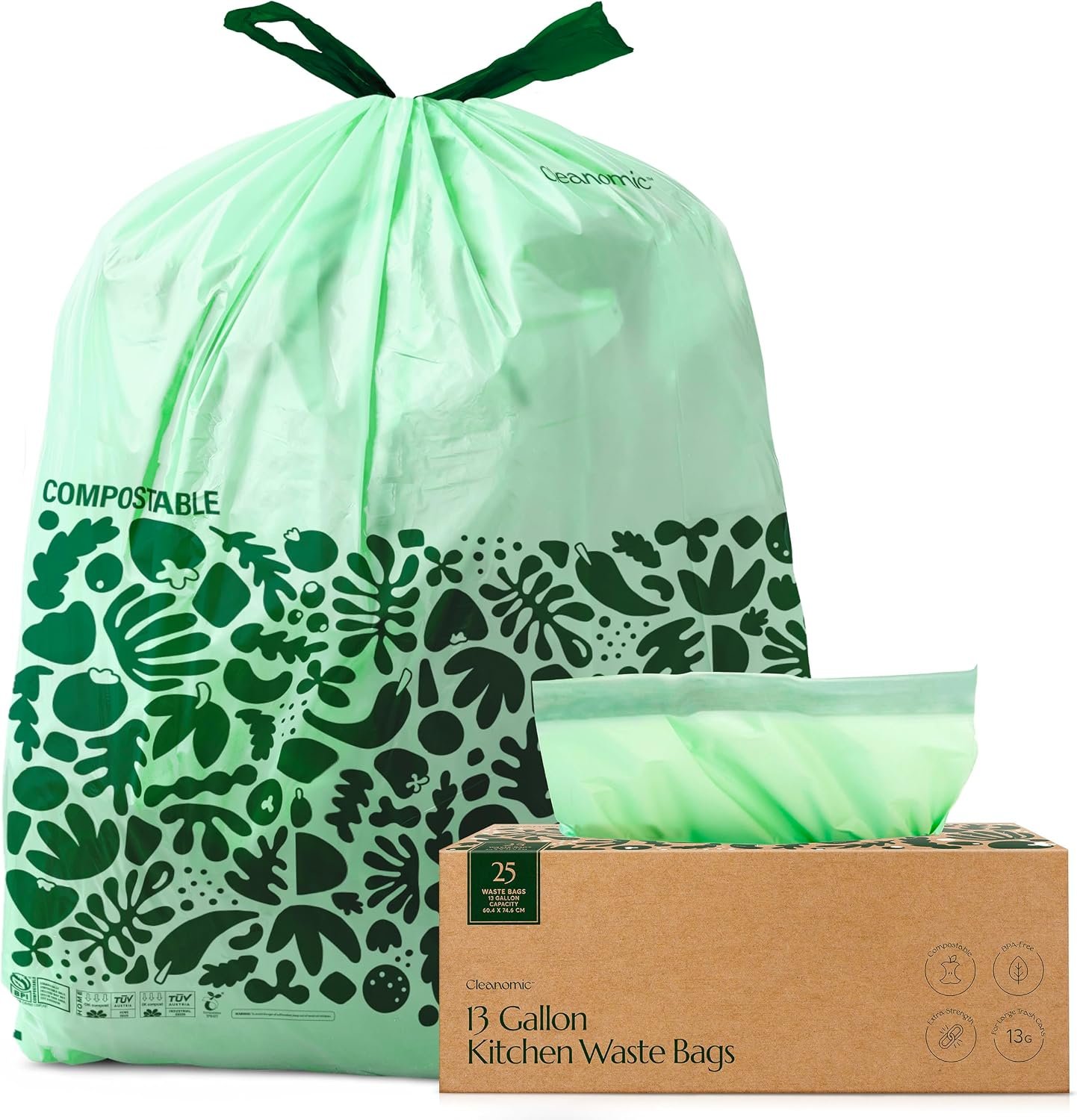
They’ll work as a compostable waste collection bin liner, with one caveat: heat and direct sunlight are specifically what the brand tells you to keep them away from. So a shaded bin is fine, a bag left baking in a truck bed all weekend is asking for trouble.
Clicking takes you to Amazon. As an Amazon Associate we earn from qualifying purchases — pricing and availability subject to change.
Get it now
Cleanomic Compostable * Waste Bags
Get the best price on Amazon →Affiliate link. See the disclosure at the top of this post.

🛍️ Shop everything in this video
Every product mentioned, in one place — these are affiliate links, so I may earn a small commission at no extra cost to you.
🛍️ Cleanomic Compostable Quart Size Food Storage Bags (25-pack) — check price on Amazon →