
4G LTE Walkie Talkie: Nationwide Range, One Big Catch
A nationwide 4G LTE walkie talkie with 3 years of service included. Here's what the cellular PTT setup solves, and where it fails.
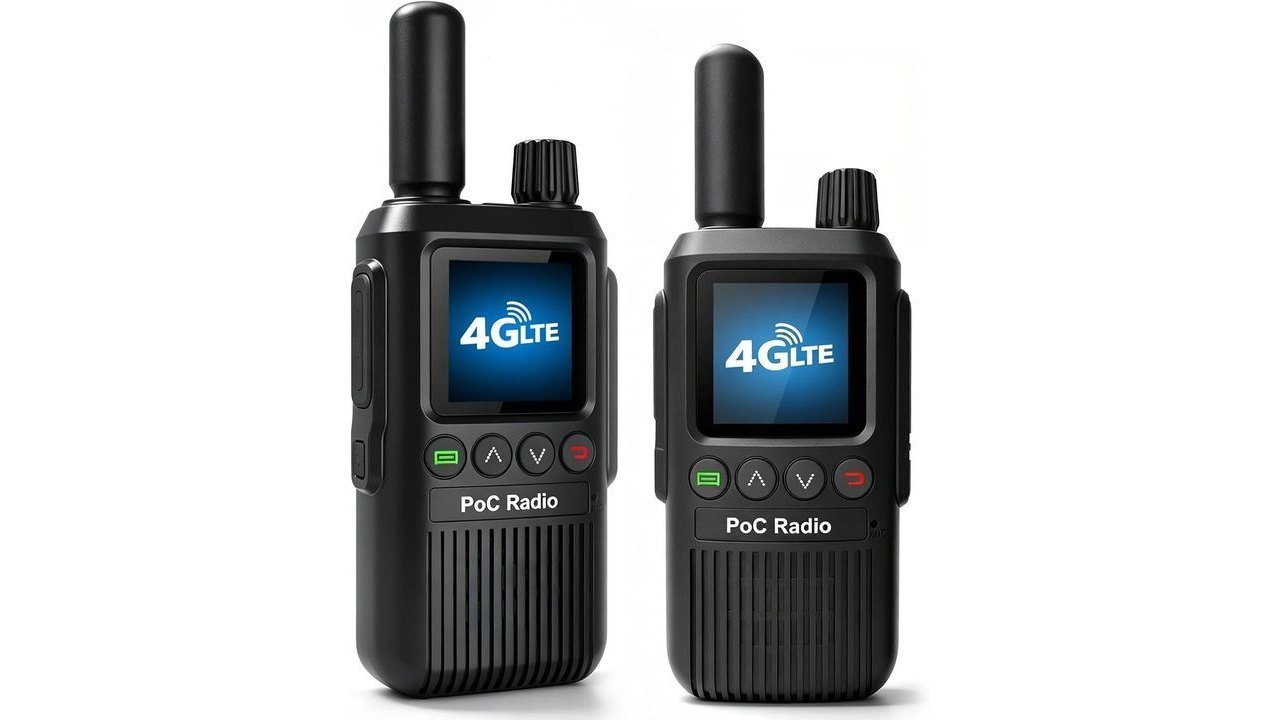
The 4G LTE Walkie Talkie is worth buying if your group spreads out farther than traditional radios reach and you’ll always be inside cellular coverage. It talks nationwide over LTE with 3 years of service included and no license needed. In a true dead zone it stops working entirely. Buy for road trips, skip for backcountry.
This post contains affiliate links. I may earn a commission at no extra cost to you.
Quick Verdict
Three years of service is bundled in, which is triple what most competing LTE radios include at the same price tier. Range isn’t the question here. Signal is. Where the carrier reaches, these talk across state lines; where it doesn’t, they’re paperweights.
Buy if you:
- Run an RV or road-trip convoy spread across highway miles
- Have family at separate campsites in a developed park
- Want zero programming and zero FCC license paperwork
- Are tired of swapping AA batteries in budget FRS radios
Skip if you:
- Hike backcountry where LTE drops out, these go silent with no fallback mode
- Need to talk to GMRS or FRS radios you already own
- Expect truly zero cost forever, service renews after year three
| Network | Nationwide 4G LTE (PoC) |
|---|---|
| Battery | 3000mAh rechargeable |
| Charging | USB Type-C |
| Service included | 3 years, SIM pre-installed |
| License required | None |
| Setup | Rotary power knob, no programming |
The Range Wall Nobody Warns You About
Traditional two-way radios cap out between 3 and 36 miles, and that 36 is a mountaintop fantasy number. Put two cars in a highway convoy and you lose each other by the second rest stop. Put family at two campsites across a park and you get static.
That’s the problem the 4G LTE Walkie Talkie is built to erase. It doesn’t use radio frequency at all. It rides the cellular network, same as a phone call, which means two units can talk Texas to Montana if both ends have bars. The category name is Push-to-Talk over Cellular, or PoC, and that’s the term worth searching if you’re cross-shopping.
What the Specs Mean When You’re Standing in a Campground
Three features here do real work, and one of them is the reason people buy this over a cheaper option.
The 3000mAh battery with Type-C charging kills the “who has AAA batteries” scramble. Comparable units in this category with the same 3000mAh cell advertise 72+ hours of use and around 15 days standby. Type-C matters more than it sounds, because it means the same cable charging your phone and your headphones tops this off too. One cable in the glovebox, not three.
Private group calling is the one most buyers underrate. FRS and GMRS use shared public channels, so anyone in range hears your family logistics and can step on your transmission. A PoC group is a closed list. On comparable platforms in this category, groups scale to 200 users at once, which is far past what a family trip needs and useful for event or work crews.
And the 3 years of included service is the actual differentiator. Most competing LTE PTT radios in the ~$149 to $330 two-pack range bundle one year. Three changes the math considerably.
No signal, no radio. That’s the deal.
This is the complaint that dominates every outdoor and prepper thread about PoC radios, and it’s legitimate. These devices do not degrade gracefully in a dead zone. They stop. There’s no low-power direct mode, no simplex fallback, nothing. If the carrier doesn’t reach that canyon, neither does your voice.
“Nationwide” is carrier-dependent language. Where the underlying network has coverage, so does the radio, and not one foot further. That includes indoor dead spots most people forget about: basements, stairwells, parking garages, elevators, steel-walled warehouses.
The other friction worth flagging: the activation step. Instructions in this category commonly fail to make clear that you should activate online before powering the radio on for the first time. Skip that order and you’ll burn extra time sorting it out. Verify the activation sequence and the exact renewal cost with the seller before you commit, because renewal in this category runs roughly $50 to $60 per year once the included term ends.
FRS, Ham, Zello, or This?
Each alternative wins on something specific, so pick by your actual failure mode.
FRS/GMRS radios never need a subscription and work with zero infrastructure. They also cap around 36 miles on shared, public, interference-prone channels. Ham radio crushes everything on range and off-grid capability, but demands an FCC license and real programming knowledge. Zello on a smartphone is nearly free and has the identical LTE dependency, but now everyone needs to carry, charge and manage a phone, and nobody’s pressing a glove-friendly PTT button through a touchscreen. Satellite communicators like a Garmin inReach genuinely work anywhere, cost considerably more, and are text-first rather than voice PTT.
Cross-compatibility is a hard no. These can’t reach GMRS, FRS, or other-brand radios. It’s a proprietary cellular platform, and units only connect with others on the same subscription service. Worth knowing if you were planning to mix them into an existing radio kit.
Where It’s the Wrong Tool
Backcountry hikers, remote hunters and anyone building emergency comms should look elsewhere. The whole value proposition collapses the moment the grid does, which is exactly when preppers want a radio to work. For that use case, GMRS or ham plus a satellite messenger is the correct stack.
Also worth noting: the listing describes this as compact and durable but doesn’t state an IP water-resistance rating. Treat it as weather-aware, not waterproof, until the seller confirms otherwise.
Setup in About Five Minutes
The SIM comes pre-installed, which removes the step that stalls most people. Rotate the top knob to power on, press PTT, talk. No frequency tables, no CTCSS tones, no channel charts taped to the dash. User reports across this category put setup at roughly five minutes once activation is handled in the right order. Charge both units over Type-C first, activate online, then power on. In that sequence.
Pros
- Nationwide talk range wherever cellular coverage exists, no 36-mile wall
- 3 years of service included, triple the typical 1-year bundle in this category
- 3000mAh Type-C rechargeable battery, no disposable AAs
- No FCC license and no programming required
- Private closed groups instead of shared public channels
Cons
- Completely non-functional in cellular dead zones, with no fallback mode
- Activation must happen before first power-on, and the instructions in this category rarely say so
- Service renewal required after year three, roughly $50 to $60/year category-wide
- Cannot talk to GMRS, FRS, or other-brand radios at all
- No stated IP water-resistance rating on the listing
Frequently Asked Questions
Does it work internationally or only in the USA?
Plan on domestic US use. The included SIM and service are sold as nationwide coverage, and international roaming on these PoC plans is either unsupported or carries separate charges depending on the provider. Confirm with the seller before any trip across a border.
Is any FCC license required?
No. PoC radios transmit over licensed cellular data rather than licensed radio spectrum, so there’s no license, no call sign, and no paperwork. That’s the main legal advantage over GMRS, which requires a license for the higher-power channels.
How does audio quality compare to a traditional two-way radio?
It’s closer to a cell call than to RF radio. You lose the hiss, squelch and fade that analog FRS gives you at the edge of range. The trade is that poor data connectivity shows up as clipping or dropped transmissions rather than gradual static.
What happens when the 3-year service runs out?
The radios stop transmitting until service is renewed. There’s no reduced free tier. Renewal pricing across this product category generally lands around $50 to $60 per year per device, but confirm the exact figure with this seller since it varies by brand.
Get it now
4G LTE Walkie Talkie with 3 Years Service Included, Nationwide Two Way Radio, Push to Talk, Private Group Calling, No Programming, Long Battery Life for Camping, RV, Family Travel & Outdoor Adventures
Get the best price on Amazon →This post contains affiliate links. I may earn a commission at no extra cost to you.